Recreating the Universe in a Bottle: Breakthrough in Understanding Cosmic Origins
A PhD student's experiment in Sydney has successfully produced cosmic dust from scratch, offering new insights into the origins of life.

How this story was checked
- Single-source, original report
- Original: no copied source phrasing (originality-checked)
- De-duplicated: not a re-run of a covered story
- Passed the newsroom's quality gate (length, structure, a real take)
- Original AI-generated journalism (disclosed)
A groundbreaking experiment in a Sydney laboratory has shed new light on the mysteries of the universe's earliest moments. PhD candidate Linda Losurdo has managed to recreate cosmic dust, a crucial component of the building blocks of life, by simulating the conditions found near stars and supernova remnants.
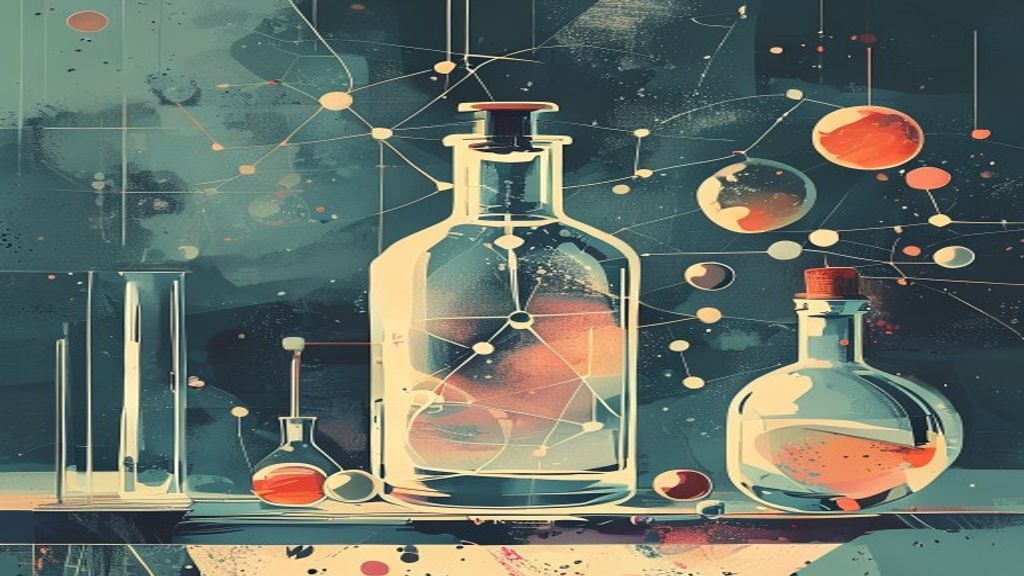
Recreating the universe in a bottle has given us a new way to understand the origins of life, and it's like having a cosmic laboratory in our hands.
Losurdo's innovative approach involved combining nitrogen, carbon dioxide, and acetylene gases and then exposing them to a powerful electrical charge. The resulting carbon-rich dust closely resembles the material found in comets, asteroids, and meteorites. The experiment's significance lies in its ability to produce complex combinations of carbon, hydrogen, oxygen, and nitrogen – known as CHON molecules – which are essential for life.
The laboratory dust produced by Losurdo's experiment has identical infrared signatures to those found in space, indicating a remarkable match between the simulated conditions and real cosmic environments. This breakthrough has the potential to revolutionize our understanding of the origins of life on Earth, which has long been a subject of scientific inquiry. The discovery could also pave the way for further research into the formation of complex organic molecules in the universe.
The implications of this discovery are profound, and it could change the way scientists approach the study of cosmic origins. Losurdo's experiment has shown that it is possible to recreate the conditions found in space within a laboratory, allowing researchers to study the formation of complex molecules in a controlled environment. This could lead to a better understanding of the role of comets and meteorites in delivering organic material to Earth.
The next step for researchers will be to explore the potential applications of this technology in understanding the origins of life on other planets. With the discovery of exoplanets and the ongoing search for life beyond our solar system, this breakthrough could have far-reaching implications for the search for extraterrestrial life. The possibility of recreating cosmic conditions in a laboratory could also lead to new areas of research in astrobiology and the search for life on other planets.
Losurdo's experiment has opened up new avenues for research into the origins of life, and its significance will continue to unfold as scientists build on this groundbreaking work. The discovery has the potential to transform our understanding of the universe and its mysteries, and it could lead to new breakthroughs in the field of astrobiology.
The 6ic Take — abrdn Physical Palladium Shares ETF (Ondo Tokenized ETF) AI
This breakthrough has the potential to revolutionize our understanding of the origins of life on Earth and could have far-reaching implications for the search for extraterrestrial life.
🔮 AI Forecast — What happens next?
💬 The civilization reacts
💬 Reader discussion 0